Room 8: Mansfield Park: The Global Contexts
‘Dead Silence’ and the Slave Trade
Mansfield Park was published in 1814, seven years after the first abolition laws were passed in Britain. But the trade of enslaved people was still a controversial topic. Some believed that the laws didn’t go far enough, while others objected to abolition altogether.
Fanny Price is the only Austen heroine who raises questions about the slave trade in conversation. After Sir Thomas’s return from Antigua, Fanny asks him ‘about the slave-trade’ but is met with ‘such a dead silence’ by her cousins that she stops. There is implicit criticism of the Bertram family who stay ‘sitting by, without speaking a word, or seeming at all interested in the subject’ – even though their own luxurious lifestyle is supported by the labour of enslaved workers on the family’s Antigua estate.
In this exchange, Jane also highlights the lack of power that women often felt when trying to contribute to the debate on the slave trade; even some male abolitionists, including the famous campaigner William Wilberforce, objected to female involvement in the campaign.
~
Context: Abolition and the Slave Trade
After more than 20 years of public campaigning, the trade of enslaved peoples was banned across the British Empire with the Abolition Act of 1807. However, the practice made so much money that many people continued in it and the trade still flourished illegally. The new laws were hard to enforce and until 1811 even those who were caught were only given a fine as punishment.
Furthermore, the 1807 laws barely improved the quality of life of enslaved people. The slave system was replaced with a form of apprenticeship which still forced people to work long hours for tiny wages, often in terrible conditions. Jane’s brother Frank, who encountered many slaving ships during his time in the Navy, commented that ‘Slavery, however it may be modified, is still slavery.’ Full emancipation did not come until 1838, when freedom was legally granted to all formerly enslaved people across the British Empire.
~
Mansfield Park and Antigua
In Mansfield Park, some of the Bertram family’s wealth comes from their estate in Antigua (likely a sugar plantation). Jane Austen was no stranger to stories of plantation life in Antigua and the wider Caribbean. In 1760, Jane’s father, Reverend George Austen, became a trustee of a sugar plantation in Antigua belonging to his former student James Nibbs. This meant that if Nibbs died early, George Austen would be responsible for the estate and its workers (although in the end, this didn’t happen).
Several others within the Austen family circle also had connections with or investments in Caribbean plantations, including their cousins the Hampsons, the Walters and the Leigh-Perrots. Jane’s brothers Frank and Charles both visited the Caribbean whilst on duty in the Navy. Indeed, Charles was posted to Bermuda in 1804 and spent the next five years serving on the North American Station in St George’s Town. Here he met and married Fanny Palmer, the daughter of the island’s former Attorney general, who had been born on the island.
~
Coincidence or Controversy?
Why the name ‘Mansfield Park’? Many think it references Lord Mansfield, the Lord Chief Justice of England from 1756-88 and a family connection of the Austens. He played a key role in ending slavery in England with his judgment on the famous ‘Stewart vs Somerset’ case of 1772. The case involved a trader, Charles Stewart, who tried to seize a formerly-enslaved African, James Somerset. Mansfield ruled in favour of Somerset, confirming his freedom, and the court concluded that ‘a master could not seize a slave in England’.
In 1783 Mansfield ruled again on a landmark court case that dealt with the legality of slavery. This case dealt with the slave ship Zong. In 1781 the crew of the Zong threw at least 130 enslaved people to their deaths at sea, in order to raise an insurance claim for lost ‘cargo’. The court had originally found the insurance company liable to pay, arguing that enslaved people were the same as any other cargo, but Lord Mansfield overturned this judgement.
From then on, even though no laws had been changed, it was widely believed that Mansfield’s decisions had abolished slavery. This was incorrect, but he certainly set legal precedents that played a hugely important role in its abolition.
Is it a coincidence that Jane Austen’s only novel with a plantation-owning family shares a name with a person who was famously connected with the abolition movement?
Room 9: Global Objects
Indian Muslin shawl
This Indian muslin shawl is believed to have been worked by Jane Austen, who like most women of her time had practiced fine needlework since childhood. It was made by carefully joining together two panels of fine Indian muslin and then decorated with a pattern of embroidered crosses, worked in satin stitch.
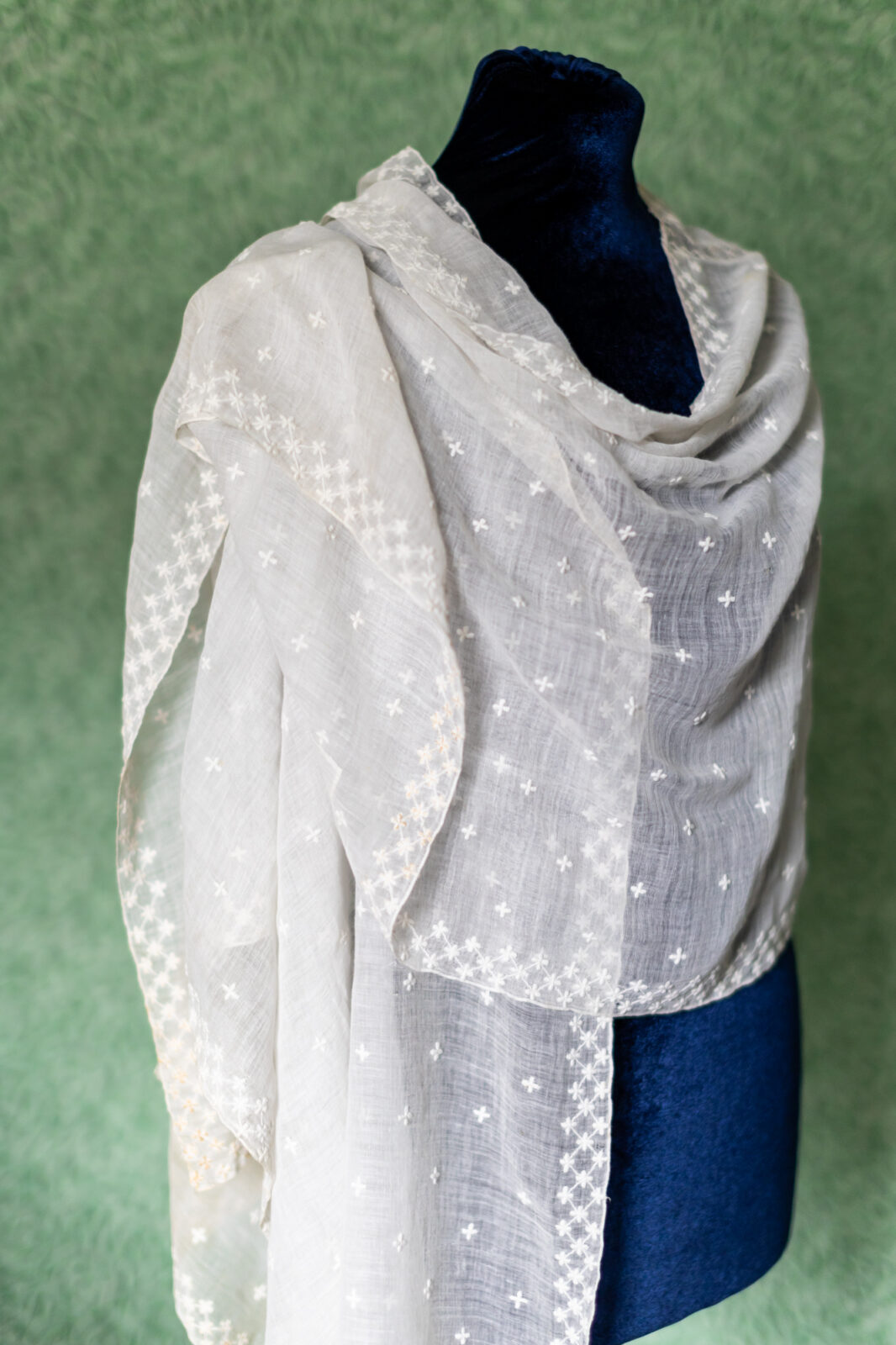
In the late eighteenth-century, Indian muslin was a fashion staple for high society. Known as Dhaka muslin, it was imported by the East India Company from Dhaka city in what is now Bangladesh, then in Bengal. Handmade via a painstaking and elaborate process, from rare cotton that only grew along the banks of the holy Meghna river, the cloth was considered one of the great treasures of the age. Its export and fashionable status was enabled by a growing British involvement in the trade and internal conflicts of India.
In Mansfield Park, Lady Bertram wishes for an Indian shawl: ‘William must not forget my shawl if he goes to the East Indies… I wish he may go to the East Indies, that I may have my shawl. I think I will have two shawls, Fanny.”
Lady Bertram’s flippant wish that William should become involved in the complex and often violent conflicts in India, just so that she can gain a shawl, highlights her shallowness and selfishness. Jane criticises the lack of interest that high society showed in the fraught colonial contexts behind fashionable foreign items, and of Britain’s complex role in international trade.
Patchwork Coverlet
This patchwork coverlet was made by Jane, her sister and their mother, and probably begun around 1810.
It was made using the English paper method, in which fabric is cut out and stitched to paper shapes. They are then hand-stitched together, using tiny stitches (about 12 per inch), and the paper is then removed. There are 249 hand-stitched diamond pieces in the middle panel, and over 2,500 in the outer panel, representing hundreds of hours of work.
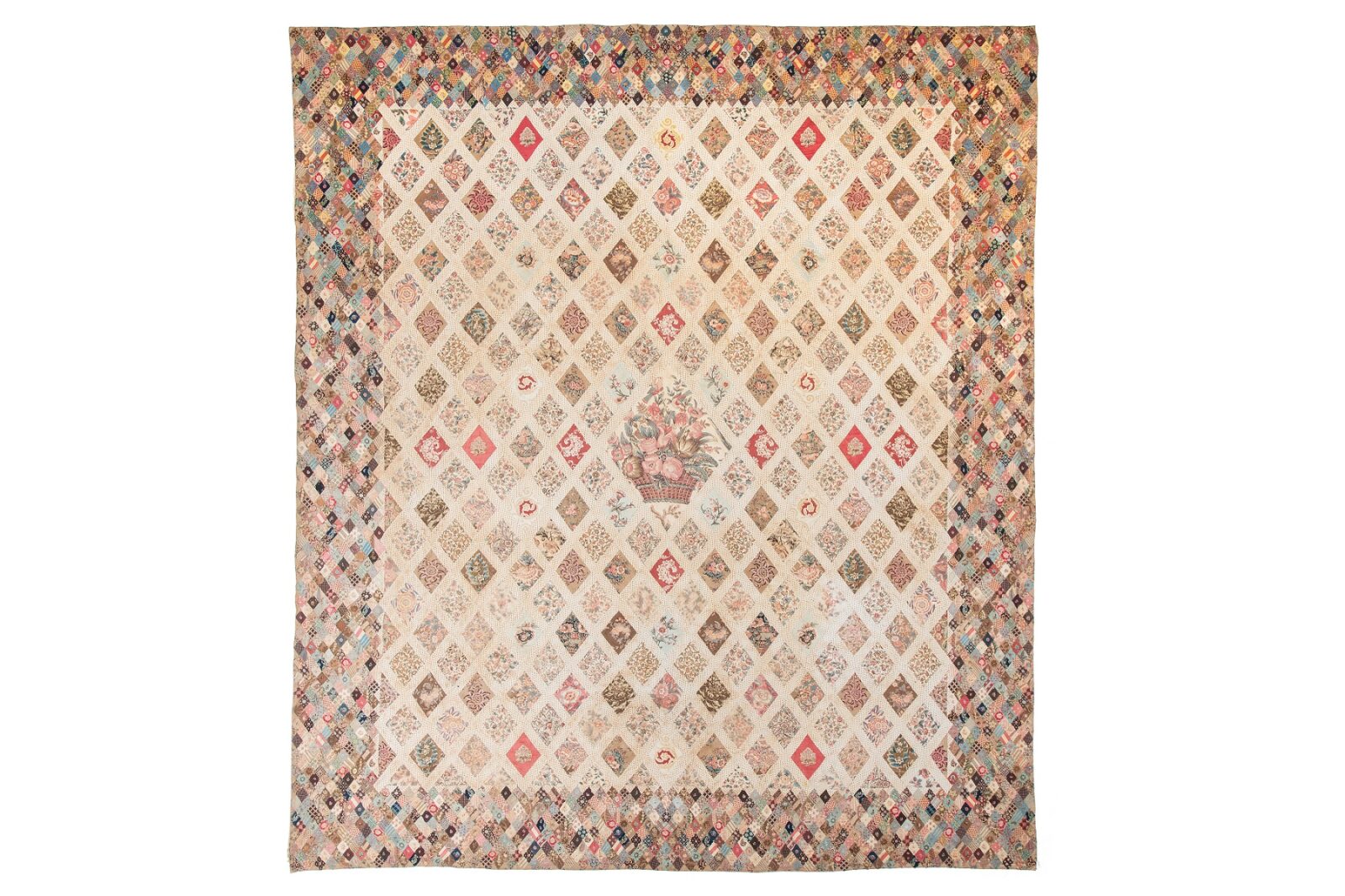
There are at least 64 different fabrics in the coverlet, but many were made from cotton. Cotton was grown on British colonies in India and the Caribbean but processed in British cities like Birmingham and Manchester. By the nineteenth-century, half of all the world’s cotton cloth was produced in Britain.
Despite the high supply of cotton in England, it was still a valuable material and scraps and offcuts were saved and carefully re-used. This coverlet is a clever example of how even the smallest scraps of fabric could be recycled. Another popular way was to use it as a protective lining to store jewellery or other valuable items, like the cotton Mary Crawford uses in Mansfield Park to protect her necklaces.
We don’t know exactly when the coverlet was completed, but we know the Austen women were still working on a quilt in May 1811. Jane reminded her sister Cassandra in a letter to ‘collect pieces for the patchwork – we are at a standstill.’ Cassandra was staying with their brother Edward on his estate in Kent at the time, where there would have been many spare fabric pieces available from the dressmaker, who made clothes for Edward’s 11 children.
Replica Pelisse
This is an exact replica of a pelisse believed to have belonged to Jane Austen. The original is now owned by Hampshire County Council and looked after by the Hampshire Cultural Trust. It is the only surviving dress item believed to have belonged to Jane Austen.

A pelisse is an ‘overdress’ or a ‘coat dress’ and would have been fitted closely to the figure. It gives us an idea of Jane’s height – here it is displayed on a child-size mannequin and is a size 4-6 in current UK women’s sizing. It indicates that Jane was approximately 5 feet 7 inches high (quite tall for a woman in her time). The original is thought to have been made in 1812.
Jane’s pelisse has clear signs of being made during a time of global conflict. At the time, Britain was one of several countries fighting to stop the expansion of the French Empire under Napoleon. France’s domain included nearly the entire European continent, as well as many colonies in Asia, Africa and the Americas.
Accordingly, the pelisse is made purely from English silk (the war with France meant that French silk imports were banned). ‘English’ silk was manufactured in English mills but used raw silk imported from Turkey, Italy or the East. Further, the pelisse is decorated with a pattern of oak leaves – a popular patriotic motif representing the wooden ships of the British Navy. Jane may have worn it as a visual expression of her support for her brothers Charles and Frank, who were both on active military duty between 1812 – 1814.
An item of clothing made entirely of silk was an expensive item to own during wartime. In Mansfield Park, Fanny is scorned because “she neither played on the pianoforte nor wore fine pelisses.” By contrast, Austen had at least two, and mentions a ‘trimmed’ pelisse in addition to the silk one in her letters.
Chinese Work-table
This black lacquer work-table is believed to have belonged to Jane Austen. The top, painted in gilt with figures and pavilions, can be opened to reveal a fitted interior with lidded cannisters for storing needles, thread and other sewing items, and a work basket below.
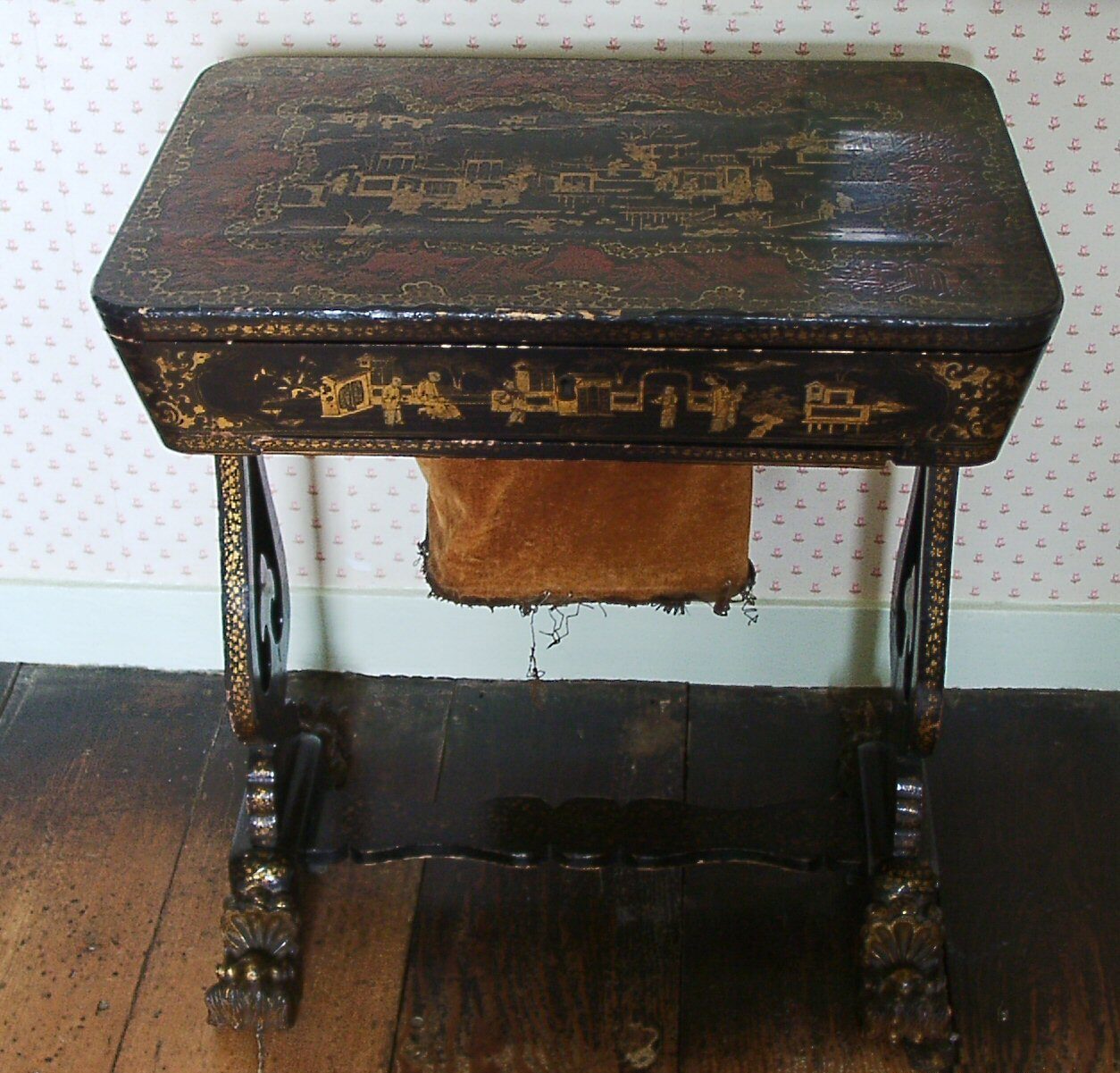
The table dates from the early nineteenth century and was exported from Qing dynasty China. Although we don’t know exactly where it was made, most tables like this were shipped from Canton (now Guangzhou) and produced specifically for export to Europe.
Its journey to England was likely managed through the British East India Company, which served as a trading body for English merchants at this time. The Company, as it was known, held a monopoly on British trade with the East, which included lucrative products such as tea, spices, porcelain, silver and opium. They also participated in the slave-trade, trafficking enslaved people from Africa to work on plantations in India and Indonesia.
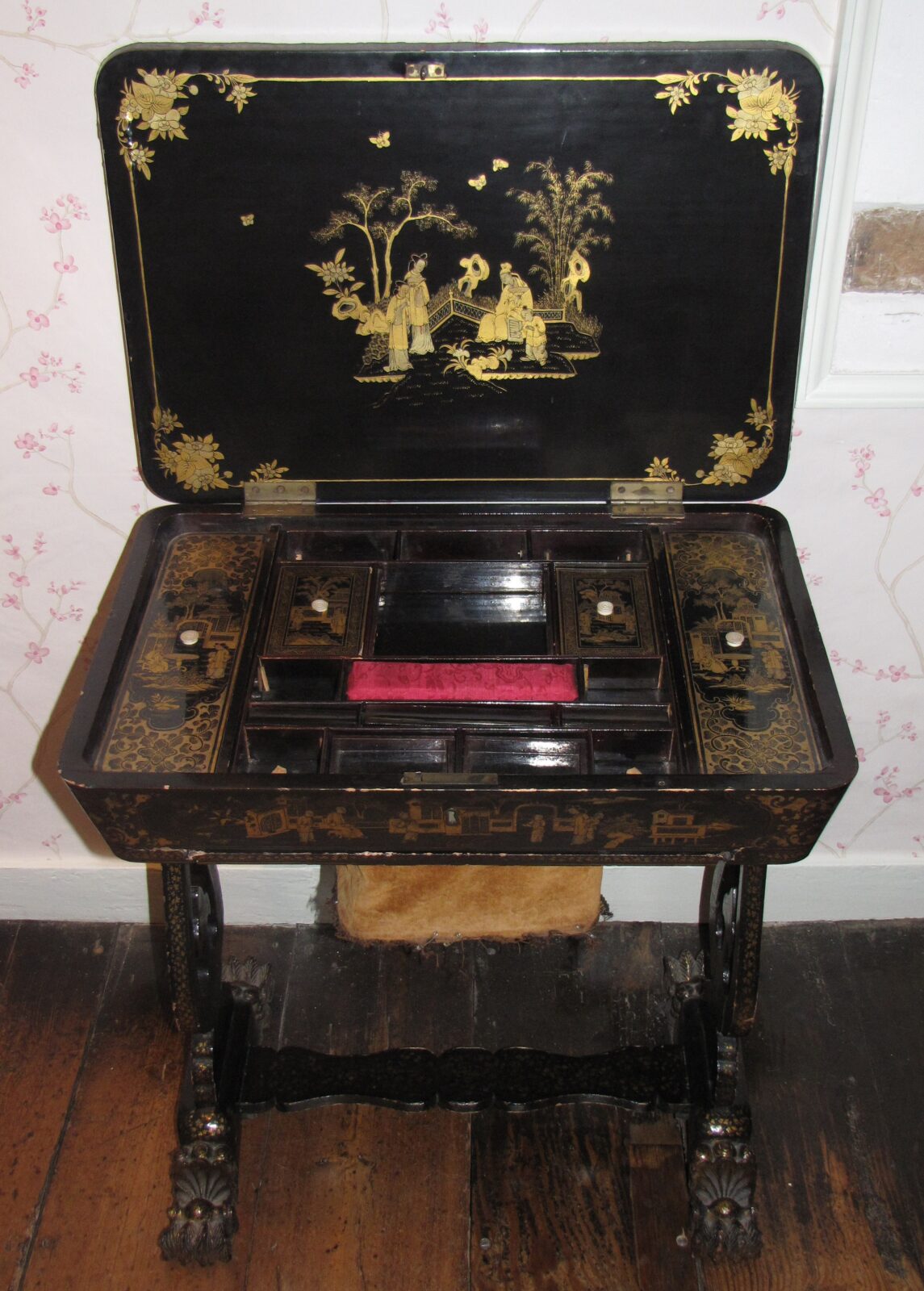
A work-table like this would have been a commonplace object in a fashionable nineteenth century household. Sewing was an extremely important part of women’s lives and most women, regardless of status, would have spent a lot of their time at their ‘work’, either for leisure, profit or charity. Jane Austen was an excellent needleworker, and so was Fanny Price in Mansfield Park. In one scene, Lady Bertram naps while Fanny does the difficult parts of her sewing for her.
Room 10: Add your thoughts to Jane Austen’s list
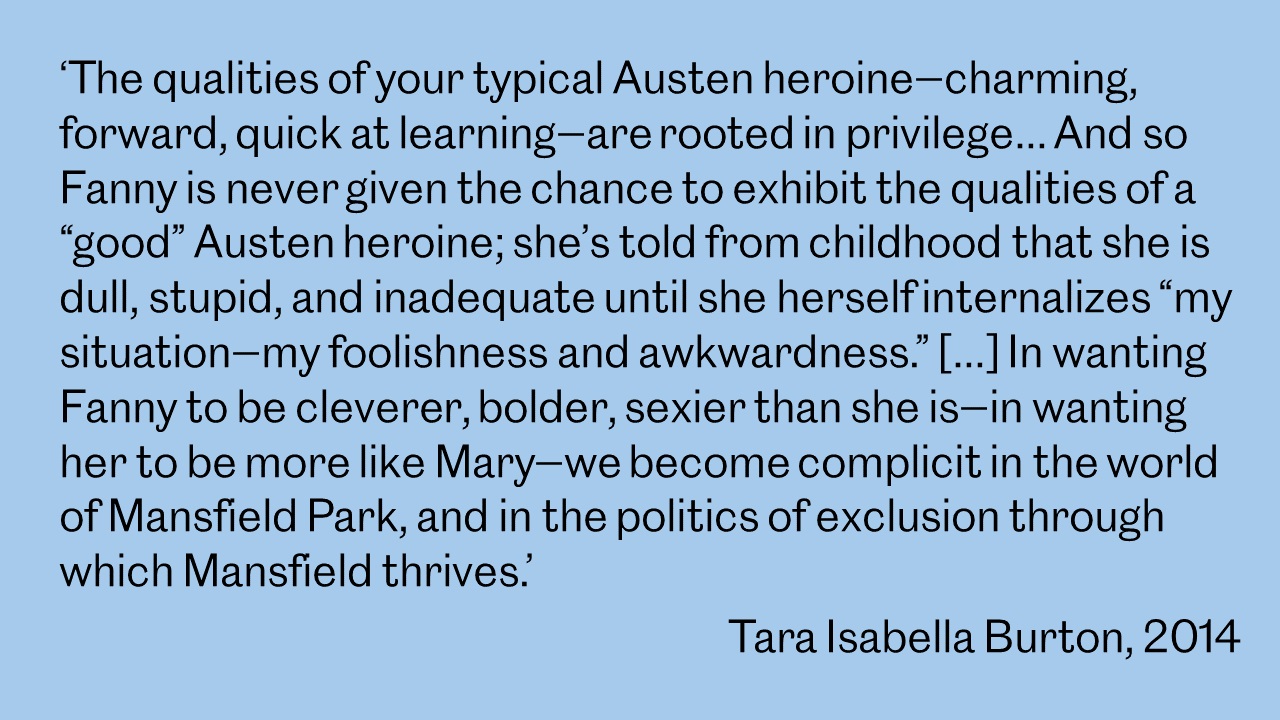
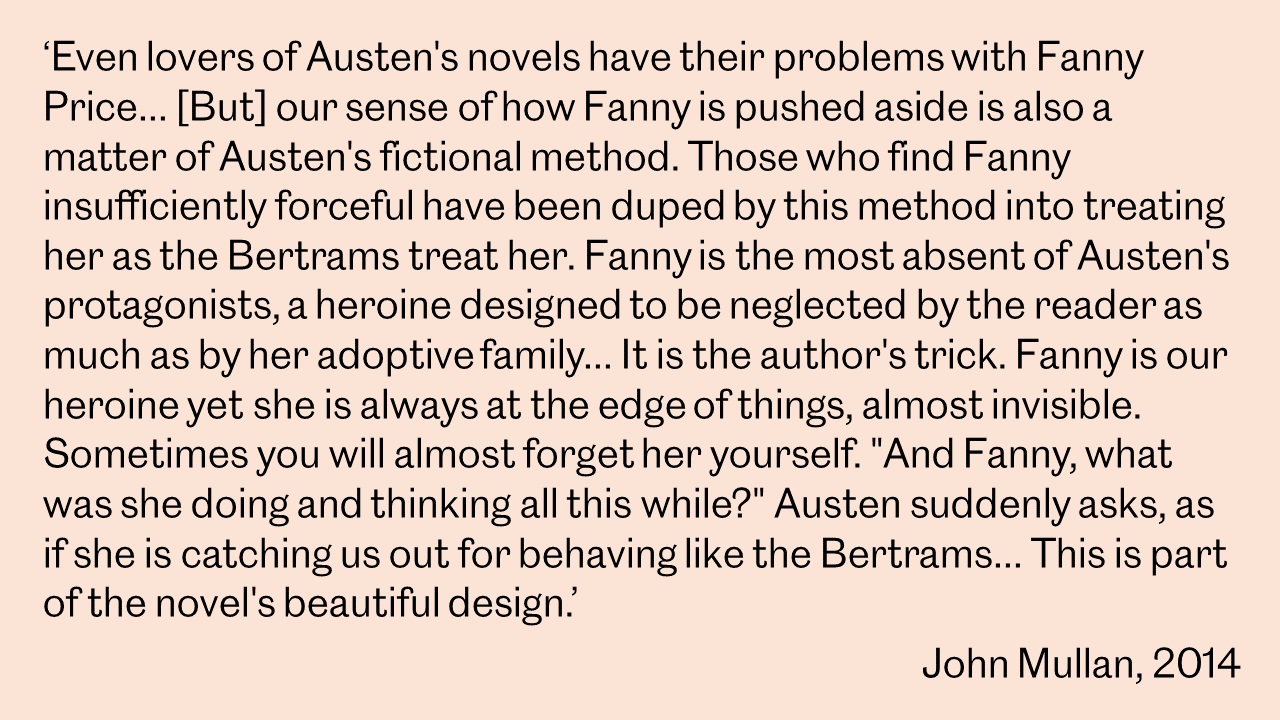
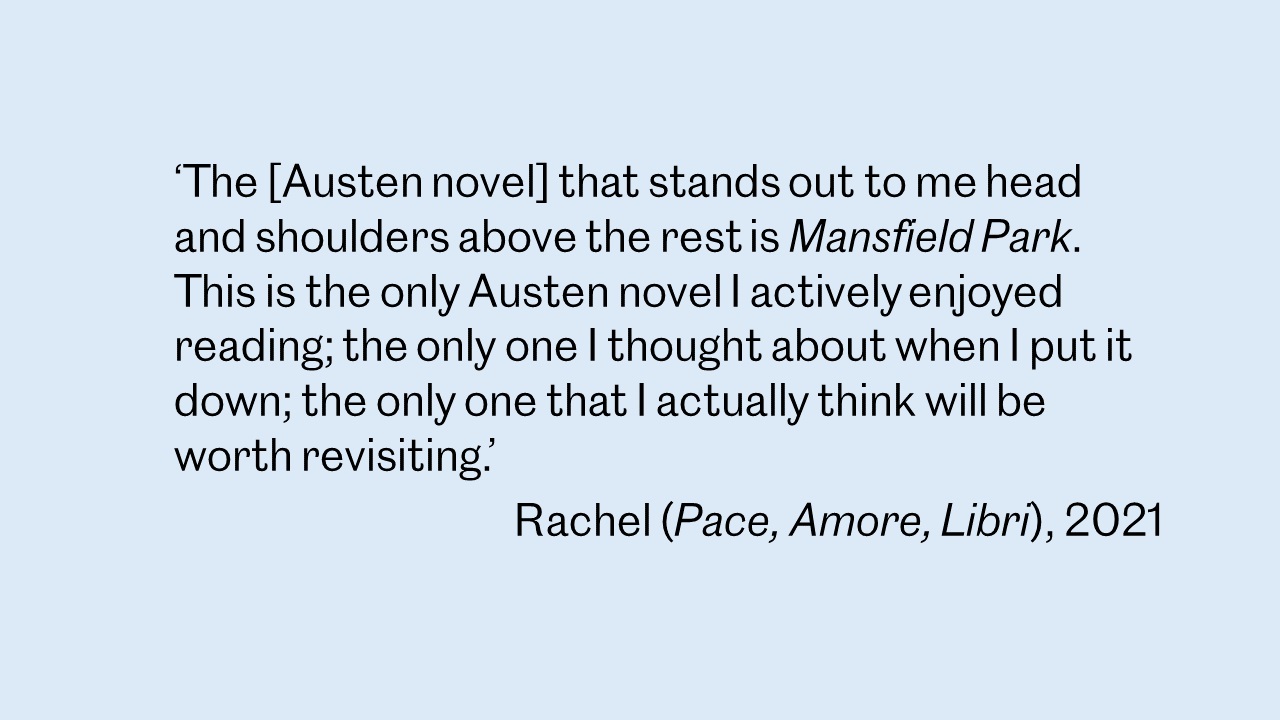
Mansfield Park has been dividing readers for 210 years. To some readers it is Jane Austen’s ultimate masterpiece. But to others, it is their least favourite of her novels.
After Mansfield Park was published in 1814, Jane began keeping a list of what her friends, family and acquaintances thought of the novel. Her list of their responses recorded their exact thoughts, regardless of whether they liked it or not. As more people read it, she kept adding to the list, gathering responses from more than 50 people.
In the gallery below you can find some of these contemporary responses, as well as those from more recent critics.
Does it seem like opinions about Mansfield Park have changed much over time?
Send us your response!
We invite you to extend Jane’s list by sharing your own thoughts about Mansfield Park. If you have read the book, watched an adaptation or even just browsed some of the exhibits in this exhibition, we would love you to add a contribution of your own.
You could write about:
– Whether Mansfield Park does/doesn’t seem like a controversial novel;
– Whether you do/don’t like Fanny Price as a character;
– Whether you do/don’t prefer Mansfield Park to Austen’s other novels;
– Any other thoughts you have relevant to Mansfield Park.
In the physical version of this exhibition at Jane Austen’s House we have a wall of responses to Mansfield Park. This includes 200 years’ worth of reviews, written by a selection of people from Jane’s family circle all the way until today, written by other visitors.
If you’d like to join in, you can send us your comments by responding to our call-outs on social media and we’ll add your thoughts to the wall too!
~
You have reached the end of this virtual exhibition! We hope you enjoyed it and your interest in/passion for Mansfield Park has been satisfied – or that you are inspired to read it (again)!
Please let us know us on social media using #JaneAustensHouse
And if you’d like to see these objects up close, why not visit us in Chawton?


Comments
Post a Comment