Room 2: A Controversial Heroine
Is Fanny Price the most divisive of all of Jane Austen’s heroines? To some readers, Fanny is a shy outsider who is easy to relate to. To others, she is moralistic, judgmental and positively unlikeable. Many readers – including some of Jane Austen’s own family – prefer the character of the flirtatious rival Mary Crawford to Fanny.
Jane Austen paid careful attention to how her friends and family reacted to Fanny. Her brother Edward thought her a ‘delightful’ character, but her mother found her ‘insipid’ and her niece Anna ‘could not bear’ her! In her next novel Emma, Jane created a heroine with all the opposite qualities to Fanny. Instead of being shy, Emma is bold and confident; instead of being an outsider, Emma is popular and admired throughout her village.
Browse through the different illustrations of Fanny in the various editions of Mansfield Park below. Note how differently she is pictured in each – which one is closest to how you think of her?
Room 3: ‘Queer fashion’: A Controversial Hairstyle
Do you picture Fanny Price with long, flowing hair? This is often how she is portrayed in illustrations and films, but actually she may be the only Austen heroine with short hair. Her brother William describes the ‘trim’ of her hair as a ‘queer fashion’ which he ‘could not believe’ was come to England. He says women must be ‘mad’ to choose such a bold hairstyle but changes his mind when he sees it on Fanny and becomes reconciled to it. From the sound of it, Fanny may have had her hair cut short in a unisex style known as coiffure à la Titus that emerged from revolutionary France.
In including this detail, Jane may have been thinking of her niece Anna who cut off her long hair in 1808 and wore it short. Like William, Jane says she became ‘tolerably reconciled’ to it, although she does admit hoping that ‘two or three years may restore it again.’
Jane Austen tells us very little about her characters’ appearance in her novels, so every detail is important. What do you think Fanny’s cropped hair says about her as a character? Does it make her seem modest and shy, or could it be a statement about androgyny?
Do you picture Fanny Price with long, flowing hair? This is often how she is portrayed in illustrations and films, but actually she may be the only Austen heroine with short hair. Her brother William describes the ‘trim’ of her hair as a ‘queer fashion’ which he ‘could not believe’ was come to England. He says women must be ‘mad’ to choose such a bold hairstyle but changes his mind when he sees it on Fanny and becomes reconciled to it. From the sound of it, Fanny may have had her hair cut short in a unisex style known as coiffure à la Titus that emerged from revolutionary France.
In including this detail, Jane may have been thinking of her niece Anna who cut off her long hair in 1808 and wore it short. Like William, Jane says she became ‘tolerably reconciled’ to it, although she does admit hoping that ‘two or three years may restore it again.’
Jane Austen tells us very little about her characters’ appearance in her novels, so every detail is important. What do you think Fanny’s cropped hair says about her as a character? Does it make her seem modest and shy, or could it be a statement about androgyny?
Room 4: Three Books and a Letter
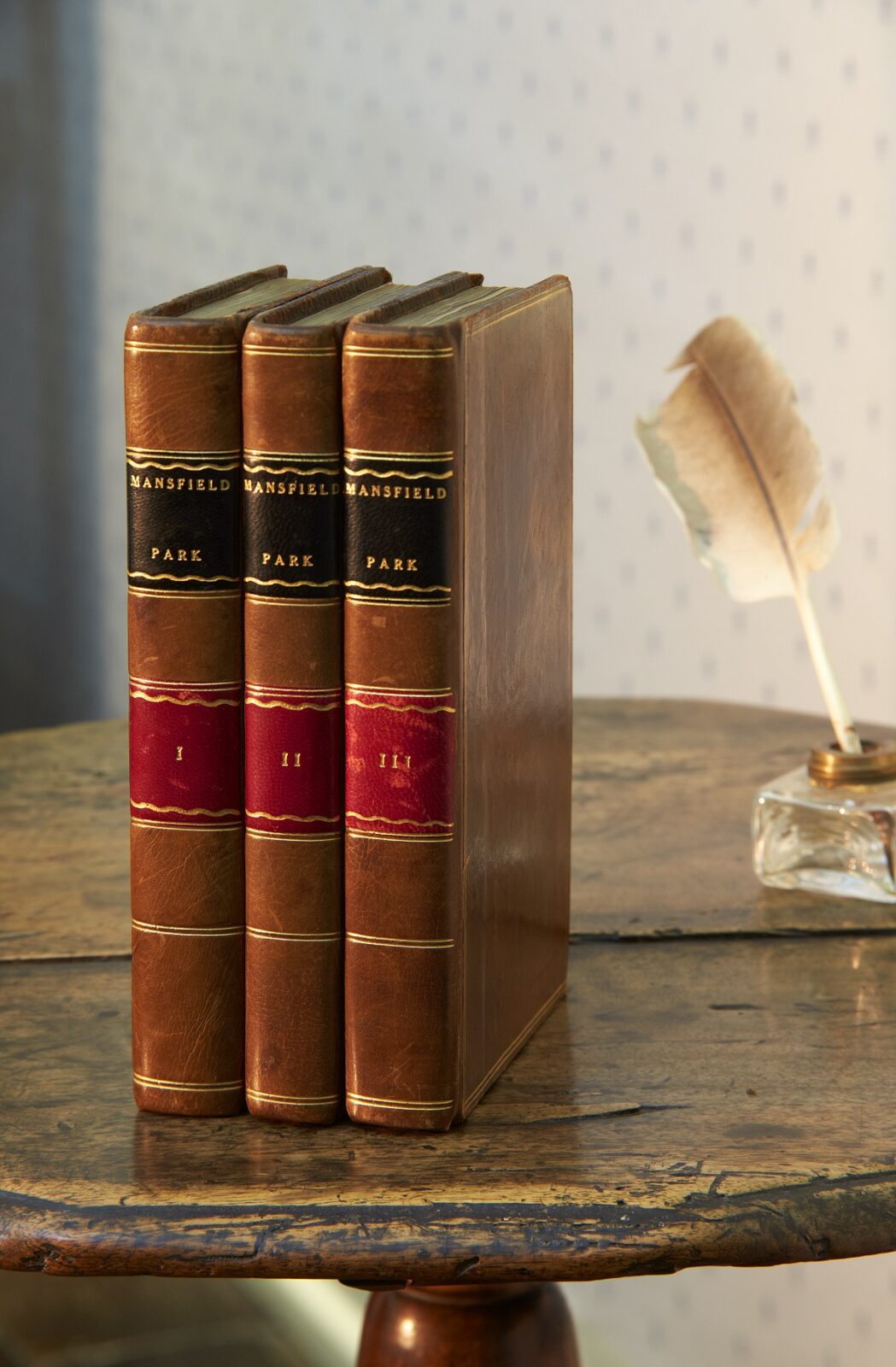
Mansfield Park by Jane Austen
Published by T. Egerton, London, 1814. First edition
First editions of Mansfield Park are extremely rare, but this set is particularly special. It belonged to Edward Austen Knight, Jane’s brother. Although Edward admired Fanny Price as a character, his teenage sons were not so sure. Jane noted that ‘George disliked [Fanny]’ and was ‘interested by nobody but Mary Crawford’. Similarly, his brother Edward was ‘pleased with Henry Crawford’ but thought Edmund too ‘cold & formal.’
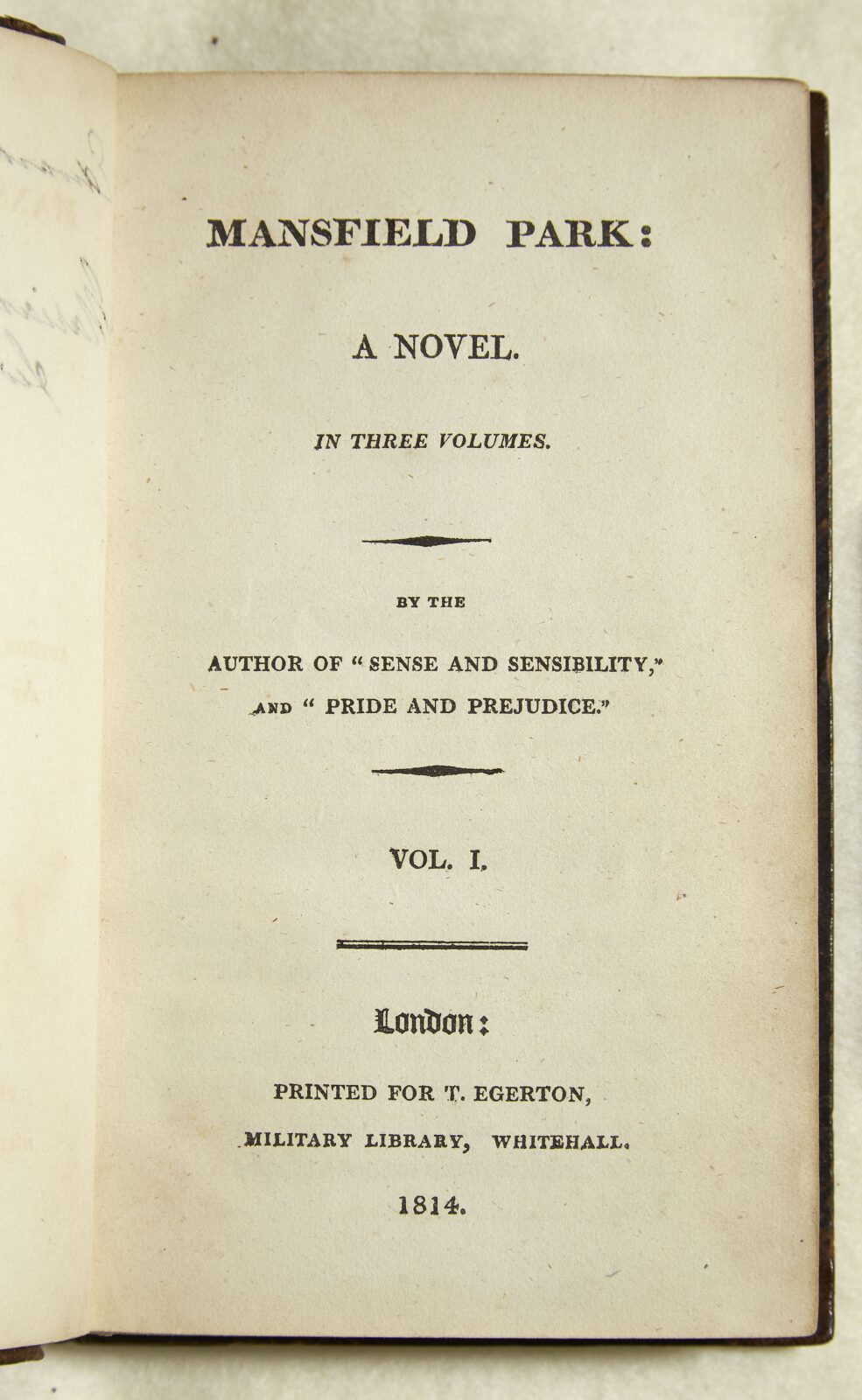
Lovers’ Vows by Elizabeth Inchbald
Published by G. G. and J. Robinson, London, 1798. First edition
Just as the Austen family loved acting out plays for their own entertainment, the young people of Mansfield Park try to stage a private play in Sir Thomas’s absence. They choose Lovers’ Vows, a play considered very shocking at the time because it involved a son born outside of marriage and featured a ‘rake’ character who defends extra-marital sex. They know that Sir Thomas would disapprove of such a play but choose it because it gives them a socially-acceptable excuse to make flirtatious speeches to each other.
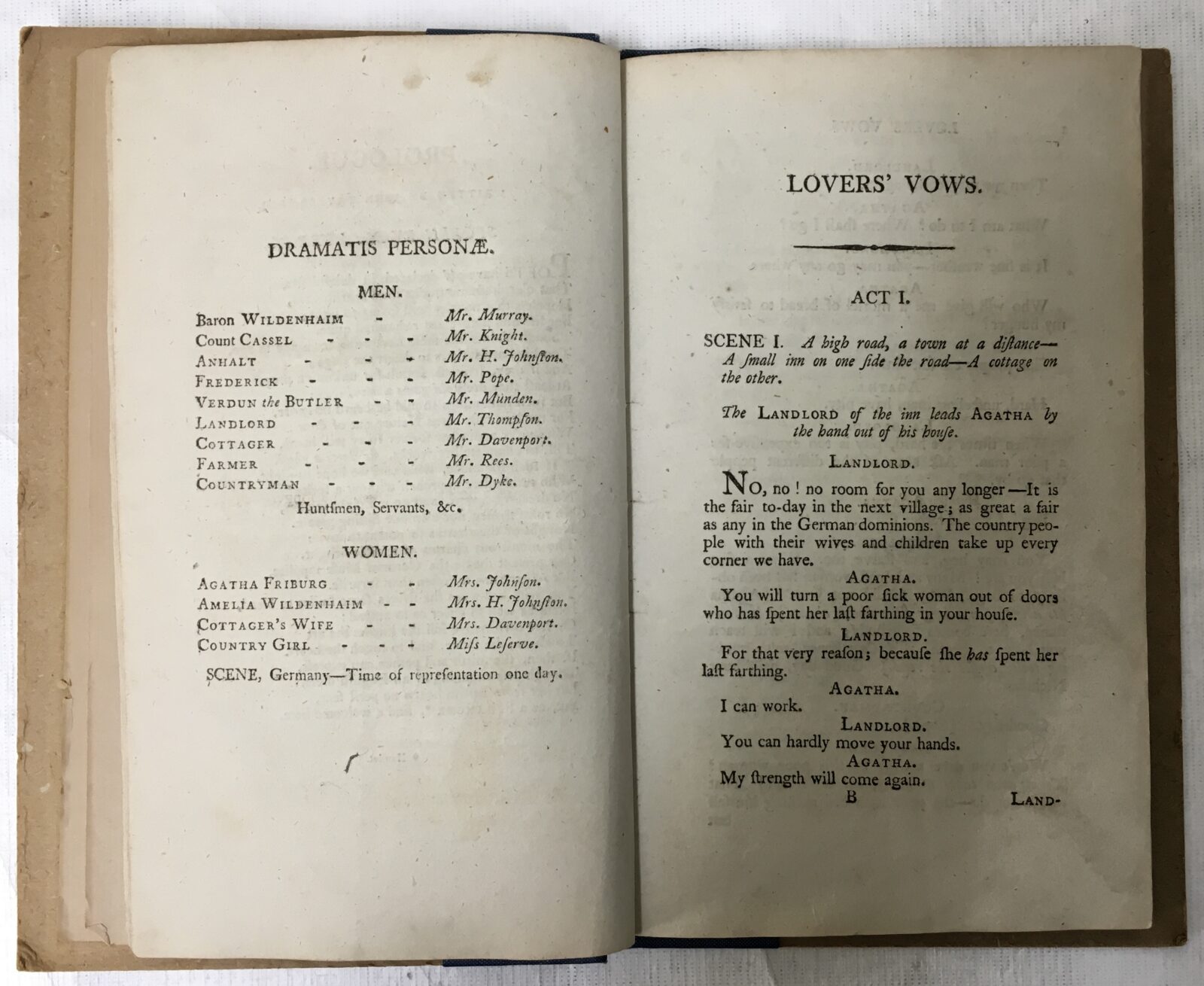
The history of the rise, progress, and accomplishment of the abolition of the African Slave-trade by the British parliament by Thomas Clarkson.
Published by Longman, Hurst, Rees, & Orme, London, 1808. First edition
Thomas Clarkson was a key figure in the abolitionist movement and campaigned tirelessly for the freedom of enslaved workers. Jane Austen hugely respected his writings and Mansfield Park shares many key themes with Clarkson’s History.
The villainous Mrs Norris in Mansfield Park may even have been named after a historic figure that Clarkson featured in the book, a real-life slave-trader named Mr John Norris. Jane admired Clarkson so much that she even joked to her sister that she was in love with him.

Letter from Jane Austen to Cassandra Austen, 24 January 1813
Jane Austen was a keen observer of life around her and often took inspiration from the things that she saw and learnt for use in her novels. This letter from 1813, when she was writing Mansfield Park, contains examples of the influences contained in her writing. For instance, she mentions attending a card party with the same number of people to play cards ‘as there were at Mrs Grants’. Then, after reading a travel book, she mentions having to change a reference to the embassy in Gibraltar as ‘there is no government House at Gibraltar.’ Jane’s letter also repeats how much she loved the writing of the abolitionist Thomas Clarkson, whose History of the Abolition of the Slave Trade is displayed above.
Room 5: The Topaz Crosses
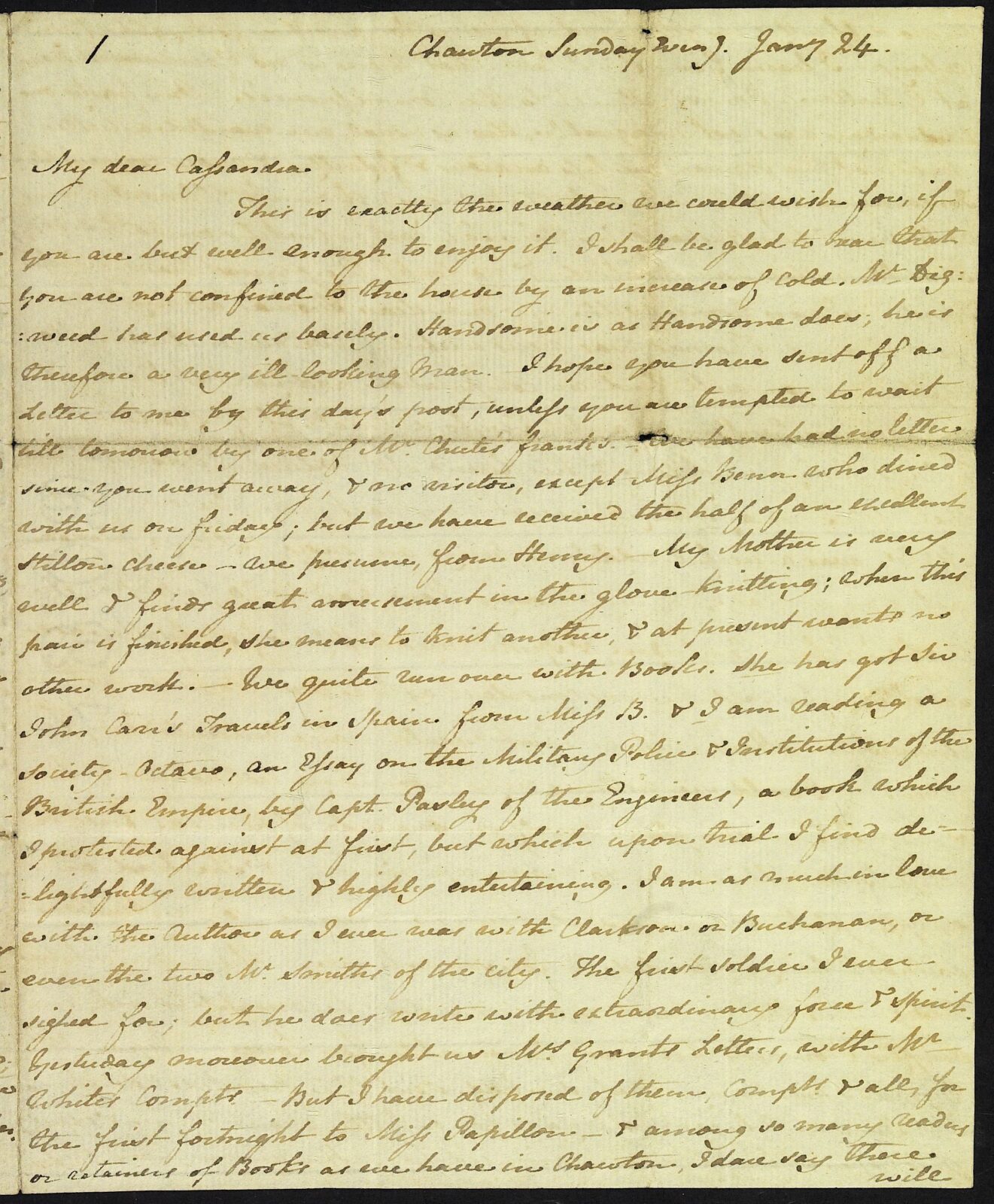
Topaz crosses, gold chain and letter from Jane Austen to Cassandra Austen, 26 May 1801‘Topaze crosses’
Charles Austen, while in service as an officer in the Royal Navy, bought these topaz crosses for his sisters Jane and Cassandra. In Mansfield Park, the heroine Fanny Price similarly receives the gift of a cross from her brother William (who is also in the Navy). Fanny wears it with a “plain gold chain, perfectly simple and neat”, given to her by Edmund – just like this one, again gifted by Charles, which Jane wore with her own cross.
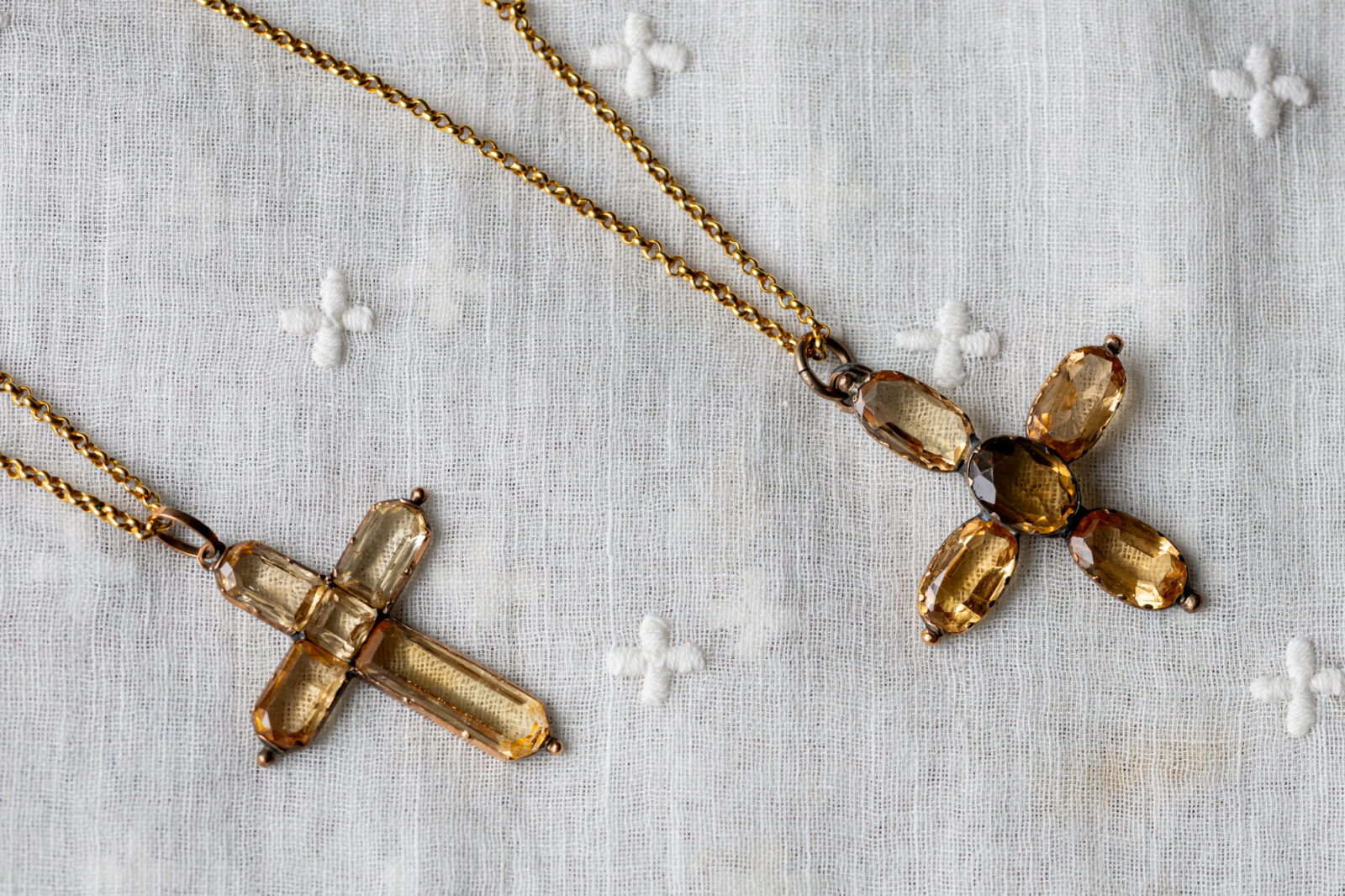
Letter from Jane to Cassandra, 26-27 May 1801
In this letter, dated 26-27 May 1801, Jane writes to Cassandra with mock indignation (but obvious delight): ‘of what avail is it to take prizes if he lays out the produce in presents to his Sisters. He has been buying Gold chains and Topaze Crosses for us; he must be well scolded … I shall write again by this post to thank and reproach him. We shall be unbearably fine.’
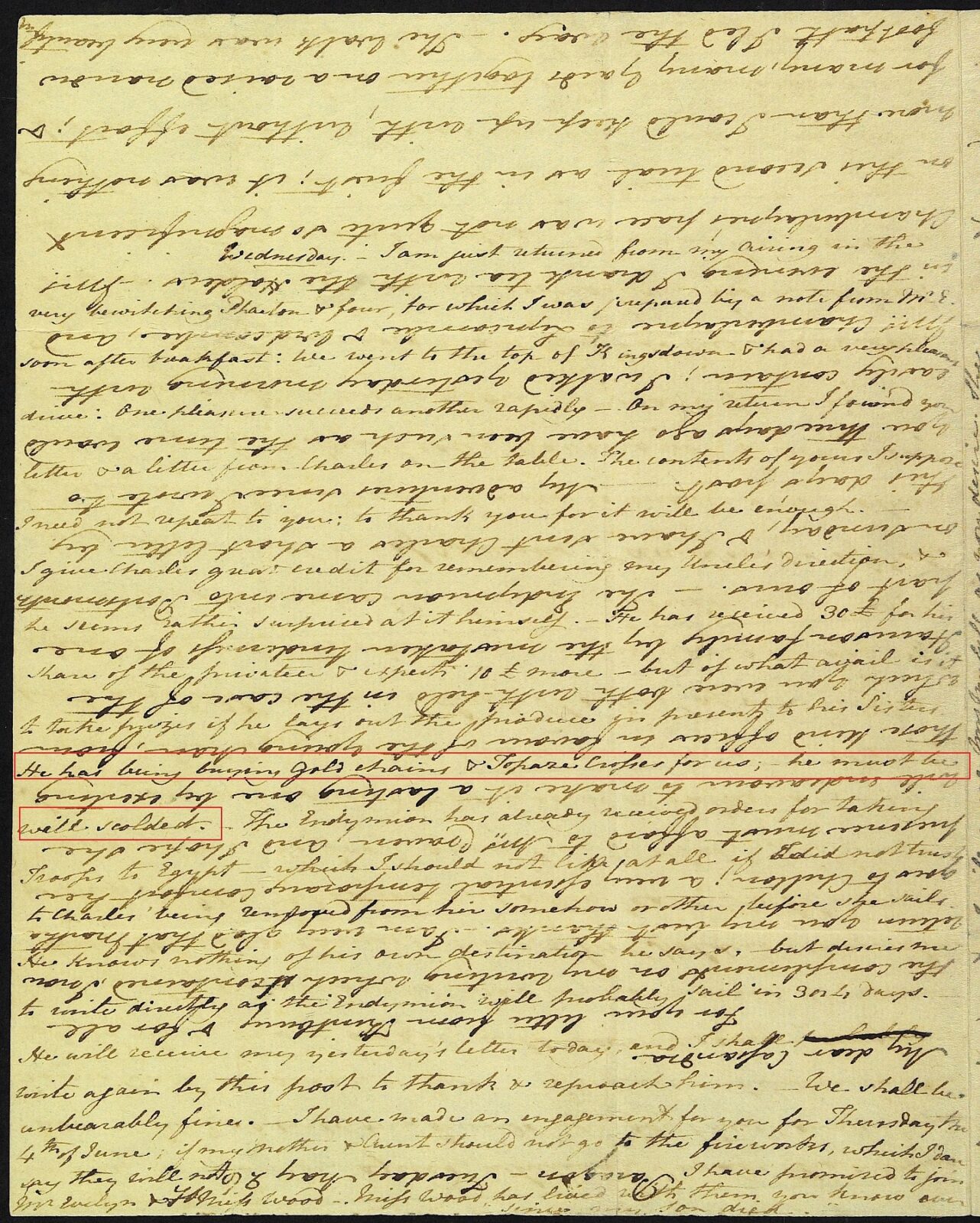
Here the letter is shown upside down, with Jane’s note about the ‘topaze crosses’ marked in a red box. This is written as a postscript, beginning five lines from the foot of the page and working upwards.
Charles bought the cross and chain using ‘prize money’. This was the term used by the ‘Prize Law’ for money paid out to those in the British Royal Navy who were present during the capture or sinking of an enemy ship. The money was distributed throughout the crew, but lieutenants like Charles (as well other captains and commanding officers) received bigger proportions than everyone else.
In Jane’s novel Persuasion, Charles Hayter describes hearing Captain Wentworth say that he was ‘very sure that he had not made less than twenty thousand pounds by the war’ – over a million pounds in today’s money.
Room 6: ‘Rears and Vices’
In Mansfield Park, Mary Crawford makes a controversial joke about her uncle’s Navy friends. When describing ‘a circle of admirals’, she says she has ‘seen enough’ of their ‘Rears and Vices’ – and then jokingly denies that she has made a sexual pun. Her wordplay links the naval titles of ‘vice-admirals’ and ‘rear-admirals’ to sex (‘vices’) and to people’s bottoms (‘rears’).
There was a common association between the Navy and sex between men at the time. This may have been reinforced for Jane by her brothers Frank and Charles, who witnessed many trials for sodomy during their time as Navy officers. Whether Jane intended the pun in this way or not, it would still have been considered a very shocking thing for Mary to say and Edmund (a future vicar) turns grave at her comment.
Room 7: Live Posting with Jane Austen
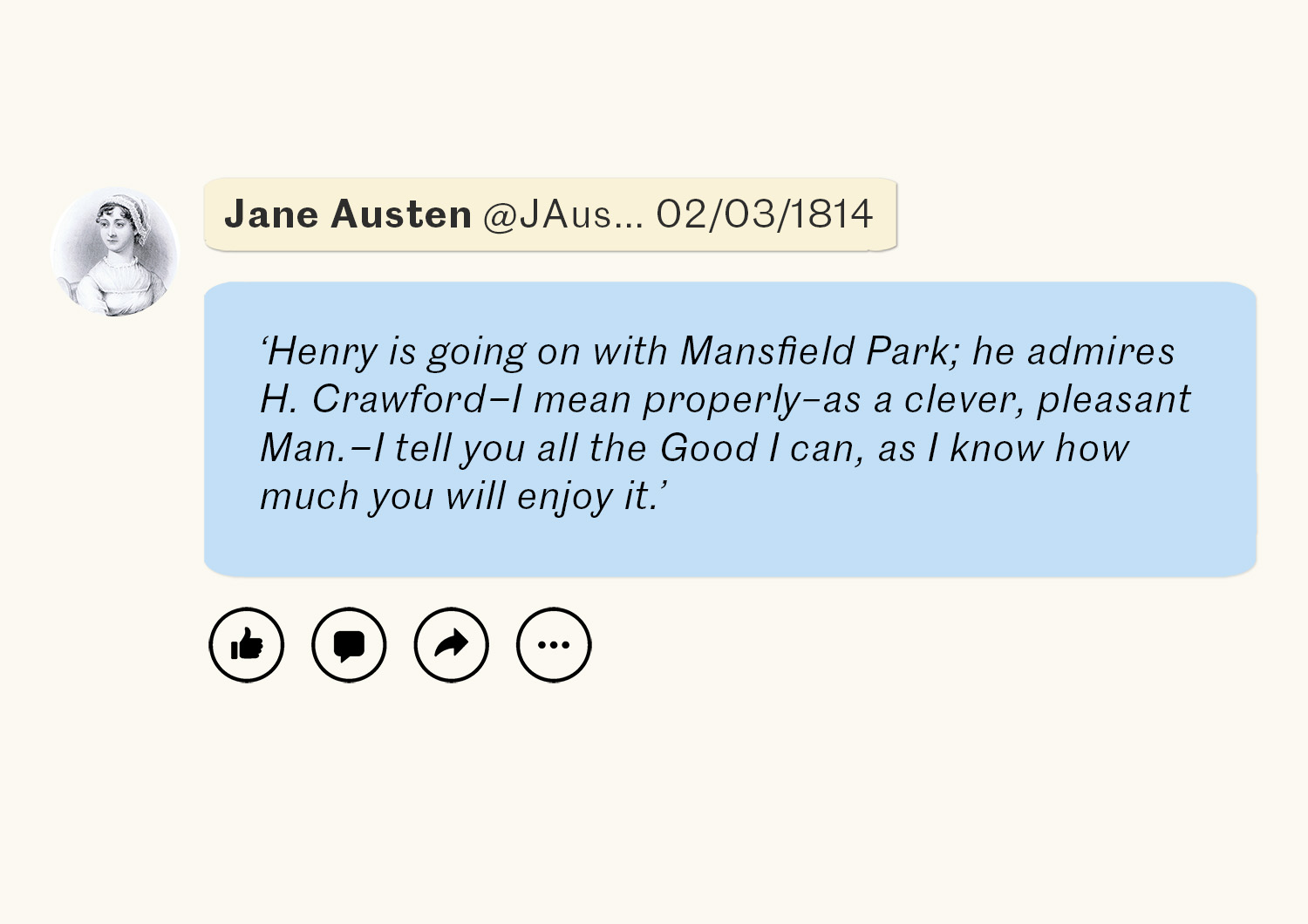
Have you ever used social media to live-post your reactions to a book, film or TV series? Jane’s letters do the same thing! In March 1814, Henry Austen invited his sister Jane to London to help her publish Mansfield Park – even though he hadn’t read it. While Jane anxiously watched him read it for the first time on the journey from Chawton to London, she recorded his real-time responses in her letters to their sister Cassandra. This was when ‘live-posting’ still involved using a post-office! Jane was especially pleased that he liked Fanny Price as a character, as not all the family felt the same.
Here are some of Jane’s comments:
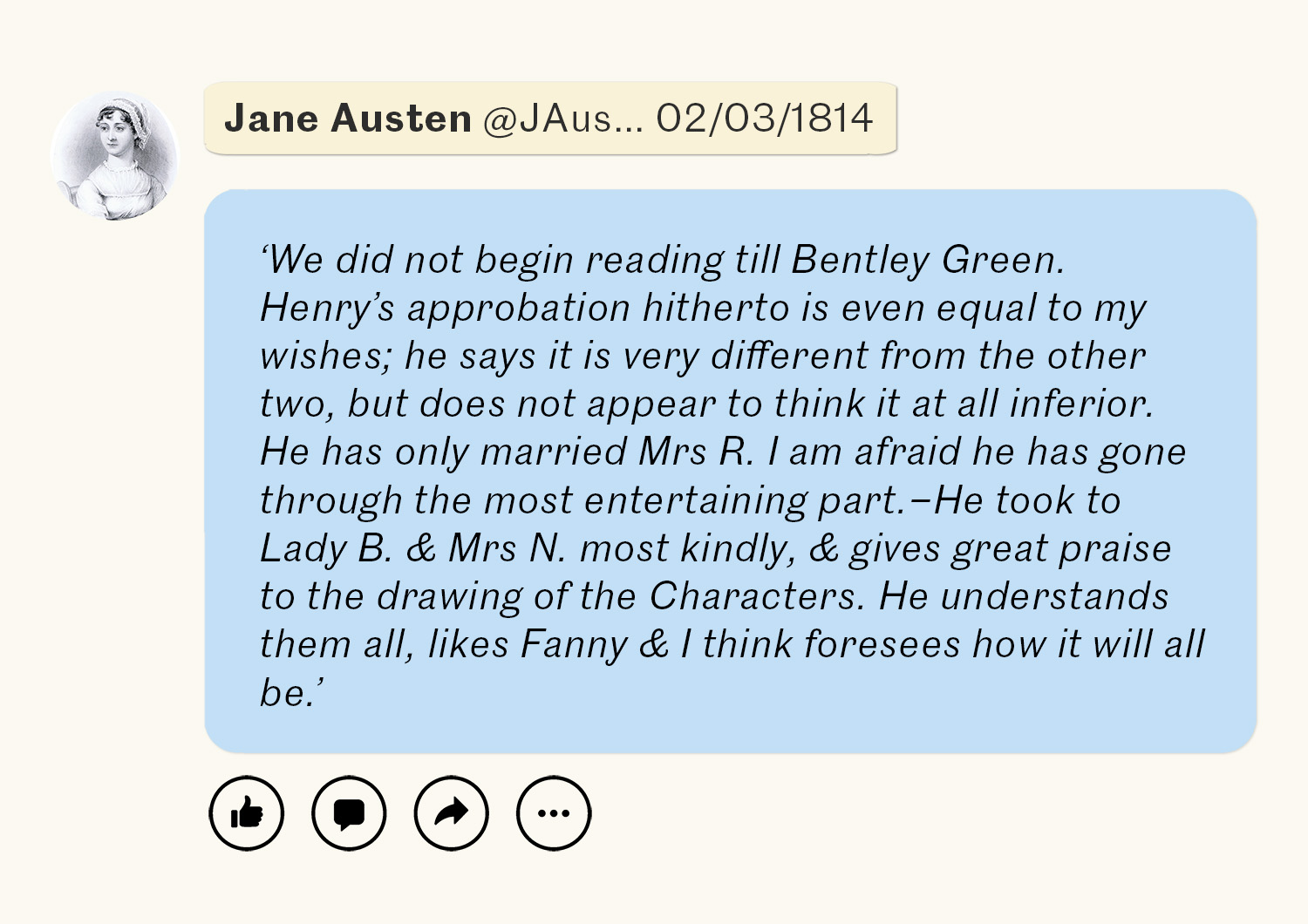


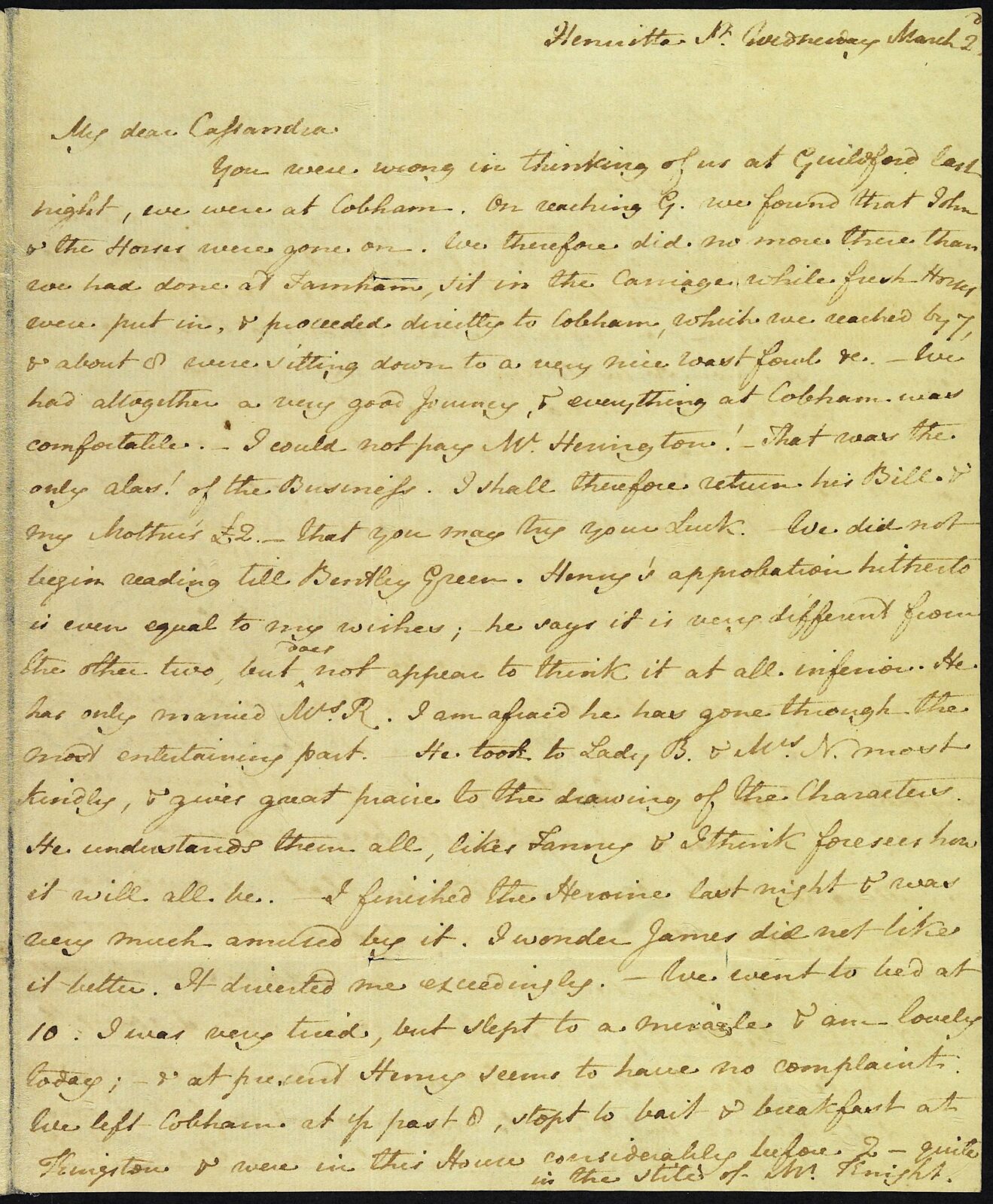
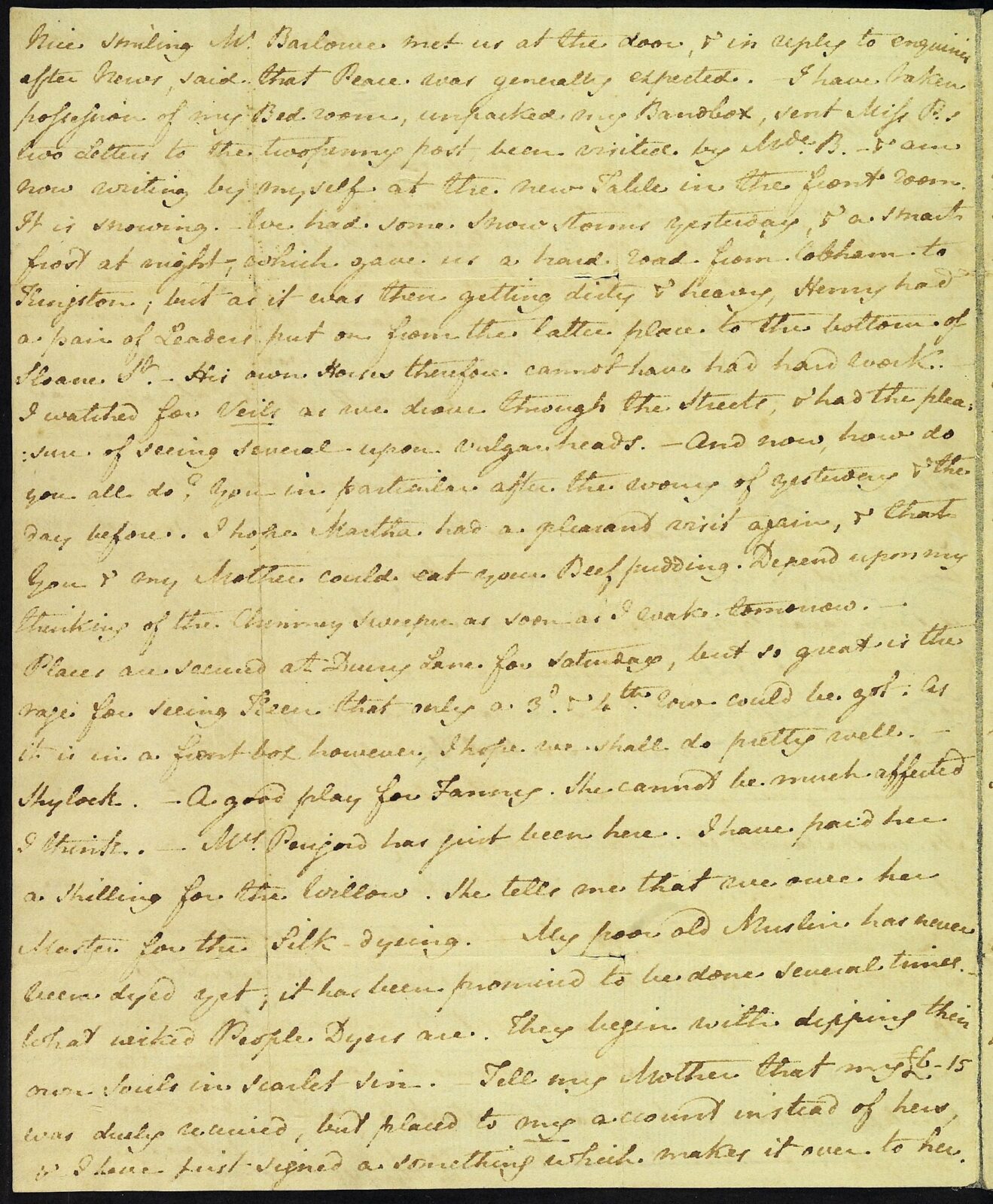
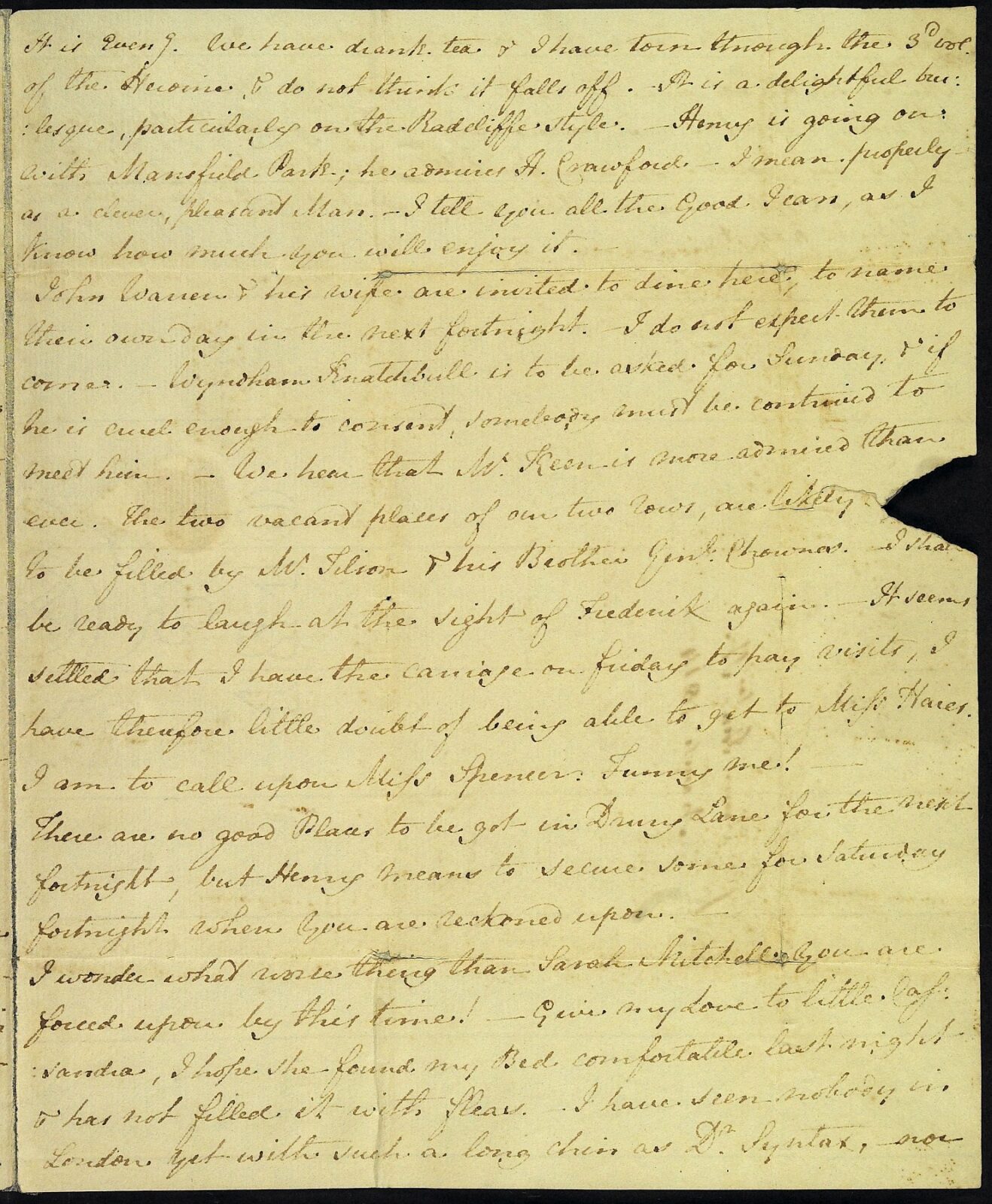
Letter from Jane Austen to Cassandra Austen, 2 March 1814
This is one of Jane Austen’s letters that contains some of her ‘live posts’ about Mansfield Park. It contains details of Jane’s stay in London and Henry’s real-time responses as he read Mansfield Park for the first time. Can you find any of them in the letter?
Comments
Post a Comment